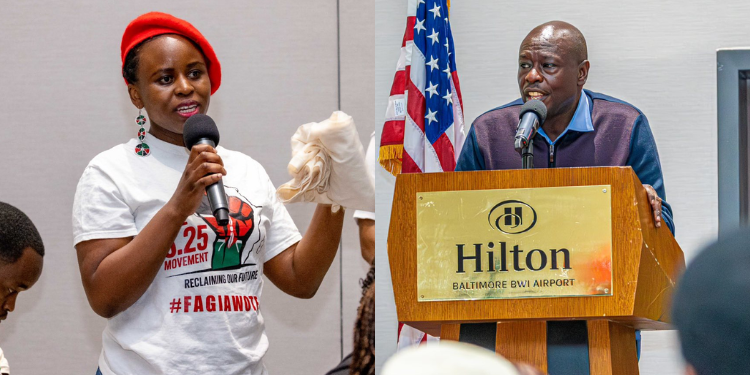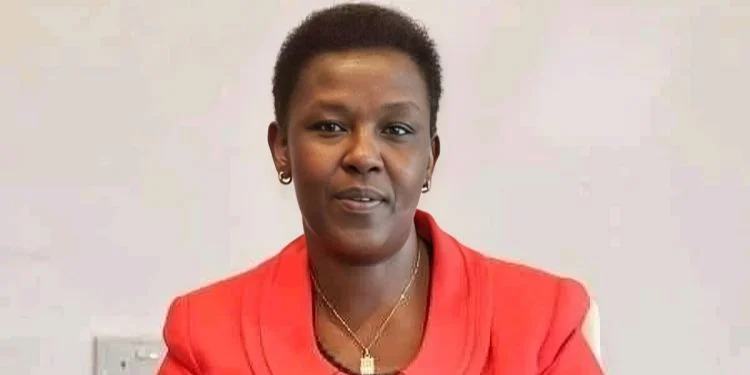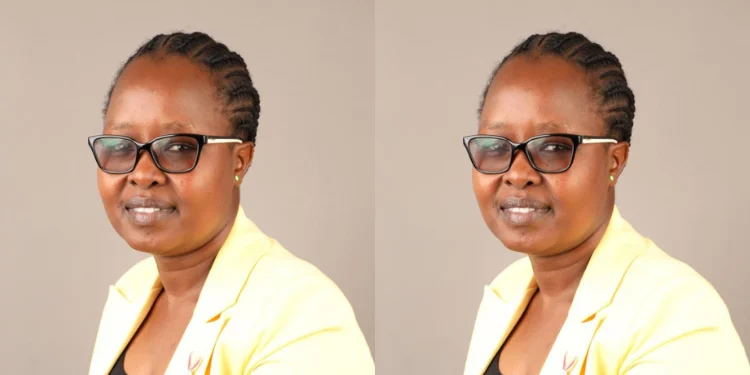

Valentine Wanjiru Githae has entered Kenya’s political conversation from thousands of miles away, yet her remarks have resonated at home. The US based policy professional drew attention after publicly challenging former Deputy President Rigathi Gachagua over what she described as tribal politics. In doing so, Valentine Wanjiru Githae positioned herself within a broader national debate about identity, leadership and the future of Kenya’s political culture.
Her intervention did not emerge in isolation. It followed a period of heightened public discourse around ethnic alignment and regional political positioning. By urging leaders to adopt a more national outlook, she articulated a concern shared by many younger Kenyans, particularly those engaged in civic reform movements. She cautioned that if political actors frame themselves primarily through ethnic identity, others may respond in kind, deepening divisions that the country has long sought to overcome.
Although based in the United States, her remarks reflect ongoing engagement with Kenyan affairs. The episode has prompted renewed interest in her academic background, professional trajectory and leadership initiatives, especially her founding of the 6.25 Movement.
Public Intervention and the Debate on Tribal Politics
A Call for National Cohesion
The moment that brought her into national headlines centered on a public exchange regarding political messaging. Addressing comments perceived as regionally focused, she argued for leadership that transcends ethnic blocs. Her position emphasized that sustainable governance requires inclusive language and national responsibility.
Rather than framing her argument as confrontation, she presented it as caution. She suggested that if one community organizes politically along ethnic lines, others may follow, creating a cycle that undermines cohesion. In this sense, her comments aligned with longstanding constitutional ideals centered on unity and equal citizenship.
Shared Roots in Mathira
Valentine Wanjiru Githae identifies herself as originating from Karandi village in Mathira Constituency, Nyeri County. The constituency is also associated with Rigathi Gachagua, who previously served as its Member of Parliament. That shared geographic link added weight to the exchange and heightened public attention.
The 6.25 Movement and Civic Memory
Origins of the Movement
Central to her public identity is the 6.25 Movement, which she founded in January 2025. The name commemorates the period between June 18 and June 26, 2024, when young Kenyans entered Parliament grounds in protest against the Finance Bill. The protests were marked by tragedy, with lives lost during confrontations.
By anchoring the movement in that timeline, she connects civic activism to collective memory. The initiative positions itself around accountability, youth engagement and institutional reform. Its formation reflects the broader mobilization of young citizens who have increasingly demanded transparency and participatory governance.
Diaspora and Digital Activism
Her leadership of the movement illustrates how diaspora professionals now engage directly in domestic debates. Digital platforms allow real time commentary and organization across borders. As a result, geographic distance no longer limits political participation. The influence of diaspora voices continues to grow, particularly among educated professionals with policy experience.
Academic Path and Governance Training
Foundations in Political Science
Her academic journey began with an Associate degree in General Studies with a focus on Political Science from Montgomery College. She later earned a bachelor’s degree in political science and government. These early studies laid a foundation in constitutional theory, comparative systems and public administration.
Graduate Education in Public Administration
She went on to complete a Master of Public Administration in Global Governance and Development at American University. That program typically emphasizes institutional design, policy implementation and international frameworks. Exposure to such academic environments often shapes perspectives on democratic practice and accountability.
This educational background provides context for her engagement in debates on governance. It also situates her within a generation of Kenyan professionals whose training spans multiple political systems.
Professional Experience in Policy and Finance
Early Career in Banking
Before entering policy focused roles, she worked in the financial sector. She joined Sandy Spring Bank in 2020 as a Senior Universal Banker and later served as a Teller Supervisor. That experience involved regulatory compliance, client services and operational management.
Banking roles often require attention to financial integrity and risk management. These responsibilities likely informed her later certifications and governance interests.
Research and Democratic Engagement
Between August and December 2023, she served as a Research Intern at The Sunwater Institute. In January 2024, she joined the Michael Dukakis Institute for Leadership and Innovation as Chief of Staff and Foreign Election Observer.
Election observation roles typically involve assessing procedural fairness and institutional transparency. Such exposure can deepen understanding of electoral integrity and comparative democratic standards.
Community and Environmental Policy Work
In May 2024, she joined the Local Initiatives Support Corporation as a Community Development Intern. She also worked with the Anacostia Business Improvement District in economic development.
Currently, she serves as a Policy and Programs Green Fellow within the Department of Energy and Environment. That position situates her within public sector policy execution, particularly in environmental governance and sustainability initiatives.
Certifications and Professional Credentials
Her credentials include certification as a Fraud Specialist through the American Bankers Association and completion of a BSA and AML Compliance certificate. She is also a Notary Public in the State of Maryland.
In addition, she holds Project Management Professional certification from the Project Management Institute. These qualifications underscore structured project oversight and compliance expertise, areas closely tied to governance and institutional accountability.
Leadership Networks and Global Orientation
She is affiliated with the National Political Science Honor Society and has participated in National Model United Nations activities. Engagement in such forums reflects sustained interest in global governance and diplomatic frameworks.
Fluent in Swahili and English, with beginner proficiency in French and Spanish, she embodies a multilingual orientation that aligns with international policy engagement. This global exposure informs her perspective on inclusive leadership and national identity.
Diaspora Influence in Kenya’s Civic Landscape
The rise of figures like Valentine Wanjiru Githae signals a broader transformation in Kenya’s political discourse. Diaspora professionals increasingly contribute to debates through organized movements, social media and policy advocacy. Their perspectives often draw on comparative governance experiences.
Her public remarks and organizational leadership highlight a generational shift toward issue based politics rather than ethnic alignment. While debates over political identity continue, voices from abroad are shaping how those debates unfold.
In this evolving landscape, her trajectory reflects the intersection of education, professional development and civic participation. Whether through organized activism or public commentary, diaspora leaders remain engaged in conversations about accountability, unity and national direction.