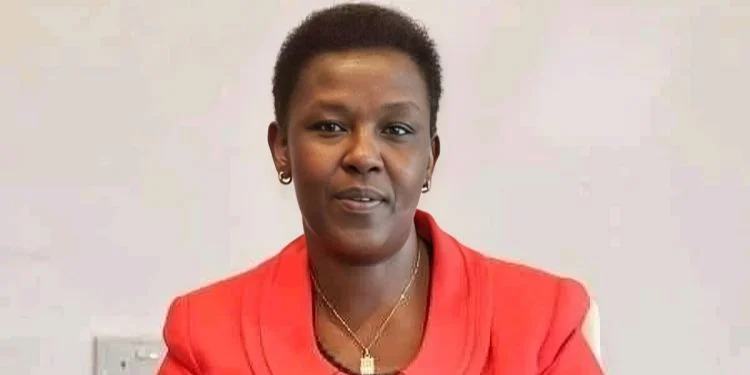

Pauline Njoroge has become one of Kenya’s most recognizable digital political communicators, known for her firm online presence and active engagement in national debates. Over the years, she has transitioned from a determined student seeking opportunity to a communications strategist operating at the center of major political campaigns. Her journey reflects the expanding role of social media in shaping modern Kenyan politics.
Born in Githiga, Kiambu County, Pauline Njoroge grew up in a modest Christian household. Her early life was marked by hardship after she lost her mother at the age of 10. Raised by her father and grandparents, she navigated financial constraints while pursuing her education. She attended Moi Girls Kamangu for her secondary schooling and completed her Kenya Certificate of Secondary Education in 2004.
Facing limited financial support after high school, she sought ways to raise college fees. One widely recounted episode involves her attempt to seek assistance from former President Daniel arap Moi at Kabarnet Gardens. Although she did not secure direct support at the time, the experience highlighted her determination to pursue higher education and professional advancement.
Education and Early Determination
Pauline Njoroge’s academic journey was shaped by financial challenges. Without immediate access to university education after completing KCSE, she relied on personal initiative and networking to build opportunities. Her path did not follow a conventional trajectory of direct university enrollment.
Despite these constraints, she immersed herself in reading, political discourse and online engagement. Over time, she built intellectual capital through self study and digital communication skills. Later, she would formalize her education while already active in political communication.
Her story illustrates how educational advancement can occur alongside professional engagement, particularly in the evolving digital era.
Rise Through Social Media Engagement
Pauline Njoroge’s entry into political communication began through social media. She used Facebook and Twitter to discuss governance, youth issues and national politics. Her posts gradually attracted attention, including that of political figures and campaign teams.
In January 2012, armed primarily with a KCSE certificate and a growing online following, she stepped into the office of then Gatanga Member of Parliament Peter Kenneth. Kenneth was a presidential candidate during the 2013 election cycle. This meeting marked the beginning of her formal political communications career.
Although Peter Kenneth did not win the presidency, his campaign experience exposed Pauline to structured political messaging, youth outreach and digital mobilization strategies. Her work during that period expanded her profile within Kenya’s political communication circles.
Role in Jubilee Digital Campaigns
Pauline Njoroge later joined the digital operations of The National Alliance party, which formed part of the Jubilee coalition. She contributed to managing social networks, media monitoring and building communication databases that included email and SMS outreach systems.
The 2013 presidential campaign of the Uhuru Kenyatta and William Ruto ticket was widely recognized for its aggressive digital strategy. Analysts often pointed to the campaign’s strong online presence as a defining factor. During this period, Pauline played a role in shaping and amplifying campaign messaging.
Following the election victory, she established what became known as the Jubilee Social Media Cabinet. The initiative aimed to coordinate online messaging in support of government policies and development programs. She also worked as a consultant digital media strategist aligned with the administration.
Her involvement in these efforts positioned her as one of the prominent digital voices within Jubilee’s communication ecosystem.
Professional Work Beyond Campaigns
After the 2013 elections, Pauline secured a contract with the New Partnership for Africa’s Development Kenya office. At the time, she worked on a casual basis due to the absence of a completed university degree. This period reflected a transitional phase where she balanced formal education pursuits with consultancy work.
Later, she undertook consultancy roles including serving as Project Manager for the Second African Union Men’s Conference. Such assignments broadened her engagement beyond party politics into continental and governance related initiatives.
Her professional trajectory demonstrates how digital communication skills increasingly intersect with institutional and international engagements.
Political Engagement in Recent Years
Pauline Njoroge has remained active in Kenya’s political space. She played a visible role in the Azimio campaign team leading up to the 2022 General Election. As a strategist and vocal online commentator, she contributed to campaign messaging and public engagement efforts.
Her positions have generated both strong support and criticism. Opposition followers and Kenya Kwanza sympathizers have often debated her statements online. Nonetheless, she has sustained a consistent presence within political discourse.
Her loyalty to Jubilee led to her appointment as deputy organizing secretary during the party’s National Delegates Conference. Additionally, she has been associated with Raila Odinga’s campaign efforts in pursuit of the African Union Commission chairperson position.
Public Persona and Social Presence
Beyond formal politics, Pauline Njoroge maintains an active social media presence that reflects both political commentary and personal experiences. Her travel experiences, shared online, have drawn attention from followers who observe her international engagements in cities such as Venice, Rome and London.
Her public persona blends advocacy, strategy and personal storytelling. Through digital platforms, she has cultivated a recognizable brand within Kenya’s politically engaged online community.
Influence in Kenya’s Digital Political Landscape
Pauline Njoroge’s career underscores the transformation of political communication in Kenya. Traditional rallies and print media now operate alongside structured digital ecosystems where messaging, monitoring and rapid response shape public opinion.
Her journey from grassroots online activism to national campaign strategy illustrates the power of digital engagement in modern governance debates. It also highlights the increasing role of women in Kenya’s political communication infrastructure.
As digital platforms continue influencing elections and public policy discussions, Pauline Njoroge remains part of that evolving narrative. Her work reflects both the opportunities and controversies that accompany visibility in Kenya’s dynamic political arena.