

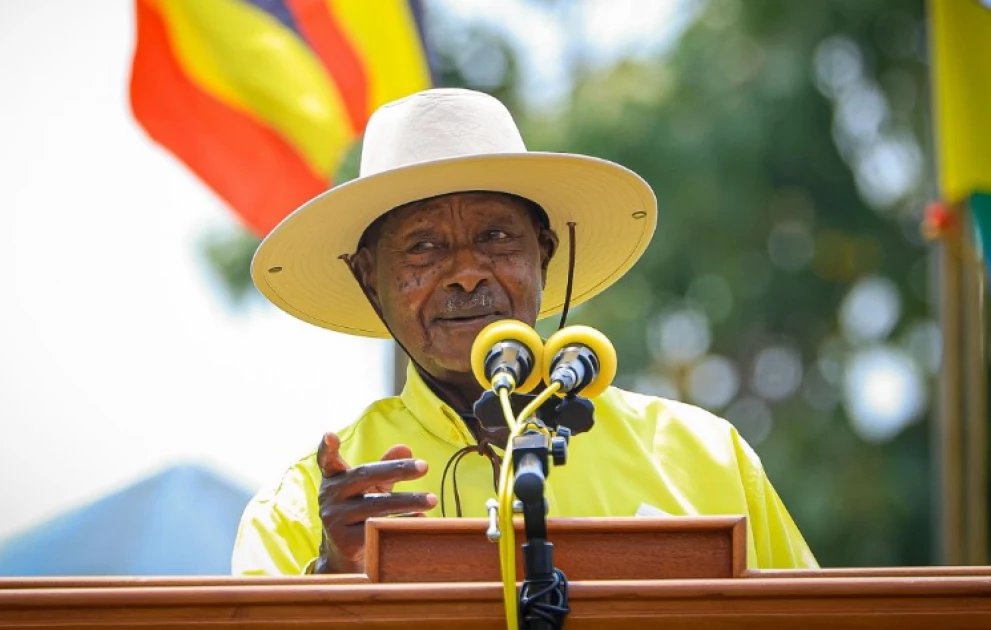
Nairobi, Kenya, Jan 17 — Uganda’s long-serving president Yoweri Museveni has been declared the winner of the country’s presidential election, securing a seventh term in office after what electoral authorities described as a transparent and credible voting process. The announcement confirms the continuation of his leadership following a poll officials say reflected the will of voters across the country.
Uganda’s Electoral Commission said Museveni, the candidate of the National Resistance Movement, won the January 15 election with 71.65 percent of the vote, translating to about 7.9 million ballots cast in his favour. His closest challenger, opposition leader Bobi Wine, officially known as Robert Kyagulanyi Ssentamu, placed second with 24.72 percent, or roughly 2.7 million votes.
EC chairperson Simon Byabakama said a total of 11,366,201 votes were cast, representing a voter turnout of 52.10 percent of registered voters. Under Uganda’s electoral system, a candidate who secures more than 50 percent plus one vote wins outright in the first round, a threshold the commission said Museveni surpassed convincingly.
Several other candidates competed in the race but received significantly fewer votes. These included Nandala Mafabi of the Forum for Democratic Change, Mugisha Muntu of the Alliance for National Transformation, Frank Kabinga of the Revolutionary People’s Party, Robert Kasibande of the National Peasants Party, Munyagwa Sserunga of the Common Man’s Party, and Elton Mabirizi of the Conservative Party.
Museveni has led Uganda since 1986 and previously secured a sixth term in January 2021. Government officials and election managers said the latest vote was conducted in line with constitutional requirements, with security deployments and temporary internet restrictions introduced as precautionary measures to maintain public order and prevent misinformation.
Opposition leaders, including Bobi Wine and his National Unity Platform, rejected the outcome and alleged irregularities such as ballot stuffing, arrests of polling agents, and intimidation. However, the Electoral Commission maintained that the results announced were accurate and verifiable, urging aggrieved parties to pursue legal channels provided under Ugandan law.
Authorities said the temporary suspension of internet access ahead of polling day was intended to curb the spread of false information and reduce the risk of election-related violence. Security agencies also addressed claims surrounding restrictions on opposition figures, stating that measures taken were based on assessed security needs rather than political targeting.
As Museveni prepares to begin another term, government leaders say the clear margin of victory and orderly conclusion of the election underscore institutional stability. They argue that the outcome provides continuity in governance and a mandate to pursue economic growth, national unity, and regional security priorities in the coming years.