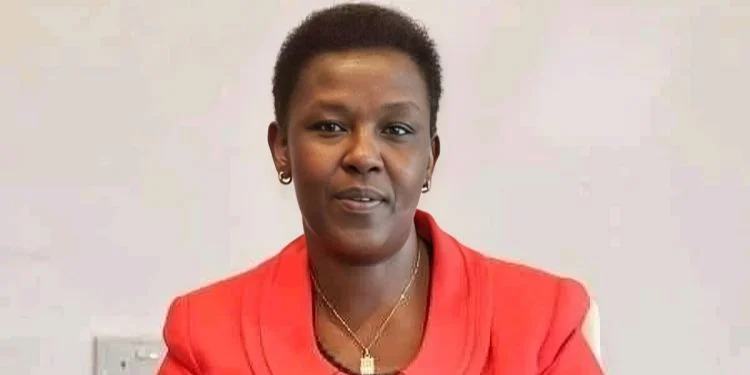


Ida Odinga stands as one of the most quietly influential public figures in modern Kenyan history. While many recognize her through her long association with national politics, her identity has never been limited to proximity to power. Over several decades, Ida Odinga has shaped conversations around women’s leadership, education, civic participation, and social responsibility in Kenya. Her public life reflects resilience, independence, and a sustained commitment to social progress rather than political ambition for its own sake.
Born in a period when opportunities for women were narrow and often contested, Ida Odinga built her influence through education, professional discipline, and civic engagement. Her journey unfolded against Kenya’s shifting political landscape, from post-independence optimism through periods of repression and reform. Throughout those changes, she remained a steady presence, often working beyond headlines and public applause. Her work as an educator, business leader, and advocate created pathways for women and young people to participate more confidently in public life.
As the spouse of Kenya’s former Prime Minister for five years, Ida Odinga occupied a public role that came with expectations but no formal authority. Instead of limiting herself to ceremonial duties, she used visibility to advance causes that aligned with her values. Education for girls, women’s participation in politics, public health awareness, and ethical leadership became central themes of her public engagement. Her approach emphasized dignity, competence, and informed participation rather than confrontation.
This article presents a comprehensive, reference-style profile of Ida Odinga. It explores her early life, education, professional career, advocacy work, public influence, and the controversies that shaped public debate around her views. The aim is to provide a balanced, factual, and readable account that reflects her enduring place in Kenya’s civic history.
Early life and family background
Ida Odinga was born Ida Anyango Oyoo on 24 August 1950 in Migori, Kenya. She grew up during the late colonial and early independence periods, a time when education was becoming a powerful tool for social mobility. Her upbringing emphasized learning, discipline, and community values, which later shaped her professional and civic choices.
Her early years coincided with the emergence of a generation that would redefine Kenya’s social and political institutions. For young women in particular, education was both a challenge and an opportunity. Ida Odinga’s pursuit of higher education placed her among a small but growing group of Kenyan women determined to claim space in professional and public life.
Education and intellectual foundation
Ida Odinga earned a Bachelor of Arts degree from the University of Nairobi in 1973. At the time, the university was a vibrant intellectual hub, producing thinkers, professionals, and future leaders. Her academic experience reinforced her belief in education as a tool for empowerment, especially for women.
During her time at the university, she met Raila Odinga, who was then associated with the institution’s engineering department. Their relationship developed within an academic environment shaped by debate, political awareness, and social change. They married in September 1973, beginning a partnership that would be tested by political pressure, public scrutiny, and personal sacrifice.
Teaching career and commitment to education
Following her graduation, Ida Odinga pursued a career in education. She worked as a teacher for more than two decades, dedicating herself to shaping young minds in Kenya’s secondary school system. Her most notable posting was at The Kenya High School, a leading public girls’ boarding school in Nairobi.
Teaching allowed Ida Odinga to translate her beliefs about education into daily practice. She mentored students during formative years, encouraging confidence, critical thinking, and ambition. Many of her former students later emerged as leaders in public service, reinforcing her impact beyond the classroom.
Her teaching career unfolded during a politically tense era. When her husband was imprisoned as a political detainee in the early 1980s, Ida Odinga carried the responsibility of raising their children while maintaining professional stability. During this period, she lived on school grounds, balancing personal hardship with professional duty.
Political repression and personal resilience
The imprisonment of Raila Odinga in 1982 marked a defining chapter in Ida Odinga’s life. During those years, she faced economic uncertainty, emotional strain, and state pressure. Despite these challenges, she continued working and caring for her family, demonstrating resilience that later became central to her public image.
Her situation worsened when she was dismissed from her teaching position and forced to leave her residence due to political hostility associated with her husband’s opposition activities. This experience exposed her to the personal cost of political dissent in Kenya during that period. However, it also strengthened her resolve to advocate for fairness, inclusion, and civic participation.
Entry into civic activism
In the early 1990s, as Kenya transitioned toward multiparty democracy, Ida Odinga became more visibly engaged in civic activism. She founded the League of Kenya Women Voters in 1991, an organization aimed at increasing women’s participation in politics and civic decision-making.
As chairperson of the league, she focused on voter education, leadership training, and advocacy for fair political representation. Her approach emphasized preparation and competence rather than symbolic participation. She believed women needed equal opportunity, not preferential treatment, to compete meaningfully in politics.
Her activism extended to public health and social welfare issues. She supported campaigns addressing breast cancer awareness, obstetric fistula prevention, and the eradication of parasitic diseases affecting marginalized communities. These initiatives reflected her belief that leadership should respond to practical human needs.
Business leadership and corporate influence
In 2003, Ida Odinga became the managing director of East African Spectre, a liquefied gas cylinder manufacturing company. Her appointment made her one of the first women to lead a major industrial company in Kenya, marking a significant milestone for women in corporate leadership.
Her role in the private sector challenged stereotypes about women’s capacity to lead in manufacturing and heavy industry. She emphasized professionalism, accountability, and long-term planning, reinforcing the idea that women could excel in executive roles traditionally dominated by men.
Her success in business strengthened her credibility as a public figure whose experience extended beyond advocacy and education. It also reinforced her position as a role model for women aspiring to leadership across sectors.
Public role as spouse of the Prime Minister
When Raila Odinga became Prime Minister in 2008, Ida Odinga assumed the informal role of spouse of the Prime Minister, a position without constitutional definition but significant public visibility. She used this platform selectively, focusing on advocacy rather than political power.
Her public engagements highlighted education, women’s empowerment, and social justice. She avoided partisan rhetoric, instead framing her contributions around national development and ethical leadership. Her style contrasted with more performative public roles, earning respect for restraint and substance.
Views on women and leadership
Ida Odinga has consistently articulated a philosophy of strength rooted in education and self-reliance. In public interviews, she emphasized that marriage should not diminish a woman’s agency or ambition. She framed partnership as mutual support rather than hierarchy.
Her advocacy for constitutional reforms aimed at increasing women’s representation in Parliament reflected this belief. Although such initiatives faced resistance and ultimately failed to pass, her participation underscored the ongoing struggle for gender equity in Kenyan politics.
Religious regulation debate
One of the most publicly debated moments in Ida Odinga’s recent public life involved her call for the regulation of churches. She argued that the rapid growth of unregulated worship centers required oversight to protect congregants and ensure ethical leadership.
Her remarks triggered strong reactions from religious leaders and members of the public. Critics accused her of overreach, while supporters framed her position as a call for accountability. Following the backlash, she clarified and apologized, stating that her comments had been misinterpreted.
The episode highlighted the sensitivity of religion in Kenyan public life and reinforced Ida Odinga’s willingness to engage with complex issues, even at personal cost. It also demonstrated her capacity to acknowledge public concern and respond constructively.
Later years and public stance
In later years, Ida Odinga maintained a measured public presence. She declined to endorse political candidates, emphasizing personal choice and democratic freedom. Her focus shifted toward mentorship, advocacy, and family life.
The death of her husband in October 2025 marked the end of a long public partnership that had shaped Kenya’s political history. As a widow, she remains a respected figure whose influence continues through ideas, institutions, and personal example.
Legacy and enduring influence
Ida Odinga’s legacy is defined less by formal titles and more by sustained impact. She represents a generation of Kenyan women who advanced public life through education, resilience, and principled engagement. Her contributions span classrooms, boardrooms, advocacy platforms, and national conversations.
Her story illustrates how influence can be built steadily, without constant visibility, and how leadership can be exercised through example rather than authority. In Kenya’s evolving civic landscape, Ida Odinga remains a reference point for inclusive leadership and thoughtful public participation.
Key reference points
Ida Odinga is a Kenyan businesswoman, educator, and activist.
She played a major role in women’s civic participation initiatives.
Her leadership spans education, business, and public advocacy.
Her influence continues through mentorship and public discourse.
Ida Odinga’s life reflects the power of consistency, education, and quiet determination in shaping national conversations and expanding opportunities for future generations.