

The humanitarian crisis in Sudan continues to deepen as conflict, displacement, and hunger overwhelm local communities, prompting renewed calls for international action and solidarity. United Nations officials say the scale of suffering has stretched coping mechanisms inside Sudan, while neighbouring countries such as Chad shoulder an immense refugee burden.
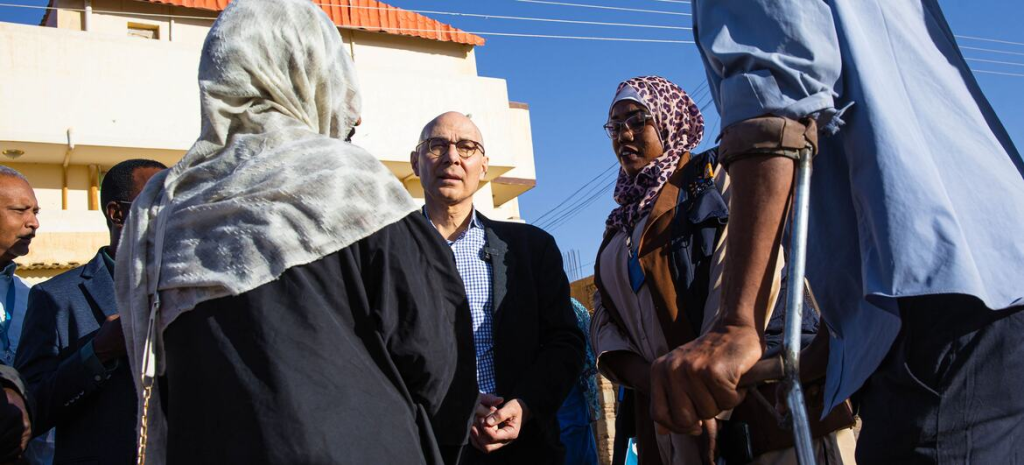
According to the UN human rights chief Volker Türk, communities inside Sudan lack adequate shelter for internally displaced people, face limited support for survivors of sexual violence, and struggle to assist people living with disabilities. Türk made the remarks after meeting more than 40 Sudanese civil society leaders in Dongola, the capital of Sudan’s Northern State.
He said local organisations understand the challenges but are also identifying solutions, stressing the need for a coordinated effort within Sudan and sustained backing from the international community. Türk added that civil society groups remain vital in responding to urgent humanitarian needs despite shrinking resources.
The conflict in Sudan began in 2023 between the Sudanese Armed Forces and the Rapid Support Forces. Since then, it has uprooted an estimated 9.3 million people and triggered one of the world’s largest hunger crises, according to UN agencies.
Türk’s visit, which began earlier this week, includes meetings with Sudanese authorities, humanitarian partners, and displaced families from conflict-hit regions such as Darfur and Kordofan. He is expected to outline key findings and recommendations at press briefings concluding his mission.
As displacement accelerates, neighbouring Chad has emerged as a critical refuge for those fleeing the violence. Since April 2023, more than 900,000 Sudanese refugees have crossed into eastern Chad, with arrivals continuing daily, according to the UN refugee agency.
The newly appointed UN High Commissioner for Refugees, Barham Salih, visited Chad this week, meeting refugee families and local leaders. Many refugees told him they had been displaced multiple times and had endured years of violence and human rights abuses.
Salih described the situation in Sudan as a humanitarian calamity of overwhelming scale, praising Chad’s decision to keep its borders open despite economic strain and environmental pressure. He called the country’s response a powerful act of solidarity at a time when global humanitarian funding is under pressure.
He also acknowledged host communities for supporting refugees despite limited resources, noting that their role is often overlooked. Salih said the UN refugee agency stands ready to work with governments and partners to expand services and economic opportunities for both refugees and host populations.
Drawing on visits to Chad and Kenya, Salih said inclusive policies backed by sustained international support can move countries beyond emergency response toward long-term solutions. He emphasised that when refugees are protected and included, they can rebuild their lives and contribute positively to the societies that host them.
UN officials warn that without increased diplomatic engagement, humanitarian access, and funding, the Sudan crisis will continue to destabilise the wider region, placing millions more at risk while neighbouring countries struggle to cope.