

EACOP is entering its final stretch as Uganda and Tanzania prepare for a major milestone in East Africa’s energy history. The East African Crude Oil Pipeline is now targeting technical commissioning in July 2026, followed by a political commissioning around October, as construction of the Tanga export terminal approaches completion.
The updated timelines were confirmed during a high-level inspection of the Marine Storage and Terminal facility in Tanzania’s Tanga Region. The visit was led by Ruth Nankabirwa Ssentamu, Uganda’s Minister of Energy and Mineral Development, together with Tanzania’s Deputy Minister of Energy, signaling strong cross-border coordination as the project advances toward first oil.
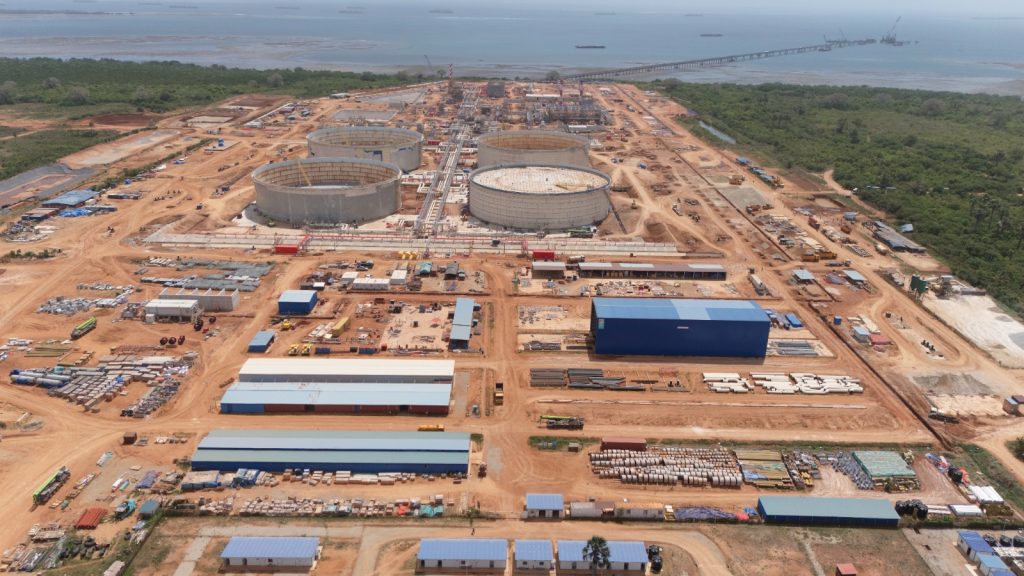
The Marine Storage and Terminal facility represents the final export point for Uganda’s crude oil and a critical downstream component of EACOP. The site includes four large storage tanks with a combined capacity of about two million barrels, supported by export pumping systems and an on-site power generation unit designed to facilitate efficient transfer of crude to international markets.
According to Minister Nankabirwa, progress along the entire pipeline system is encouraging. She noted that from the pump station in Hoima to the Chongoleani loading point in Tanga, key infrastructure is now firmly in place. Storage tanks have been completed, while security, health, and environmental safeguards are fully aligned with global standards.
Uganda’s crude oil will be temporarily stored at the terminal before being pumped to the export jetty through a two-kilometre trestle linking the onshore facility to offshore loading operations. This configuration allows tankers to berth offshore and receive crude for export to global markets.
Supporting infrastructure at the terminal is also nearing completion. Electrical, Instrumentation, Telecommunications, and Security systems, as well as the onshore abutment, are already finished. Construction of the mooring and berthing dolphins has reached roughly 85 percent, placing the terminal on track for phased commissioning beginning in the first quarter of 2026.
The July technical commissioning will involve testing and verification of the pipeline system to ensure operational readiness. Once successfully completed, this phase will pave the way for the political commissioning later in the year, expected to be officiated by the heads of state of Uganda and Tanzania. That event will formally mark Uganda’s entry into the global oil export market.
Minister Nankabirwa described EACOP as a transformative investment for the region, emphasizing its broader economic impact. She projected that capital inflows, job creation, skills transfer, and community development programs linked to the project could significantly boost regional economies over time.
Communities along the 1,443-kilometre heated pipeline route, which is the longest of its kind in the world, have already experienced benefits. Improved roads, water supply systems, and social infrastructure have strengthened local support and reinforced regional ownership of the project.
She also highlighted the importance of completing complementary infrastructure, including the Kawanda substation, to guarantee reliable renewable power for pipeline operations. In addition, advanced ICT systems will play a key role in real-time monitoring and operational efficiency.
At the Tanga terminal, Uganda National Oil Company communications officials described the site as the final chapter in Uganda’s crude oil journey. The terminal is where ships will load Uganda’s oil for export, underscoring the scale of collaboration between the two countries.
The inspection visit reaffirmed sustained political commitment and technical cooperation between Uganda and Tanzania. As EACOP moves closer to commissioning, the project is increasingly viewed as a cornerstone for regional energy development, infrastructure growth, and deeper economic integration in East Africa.