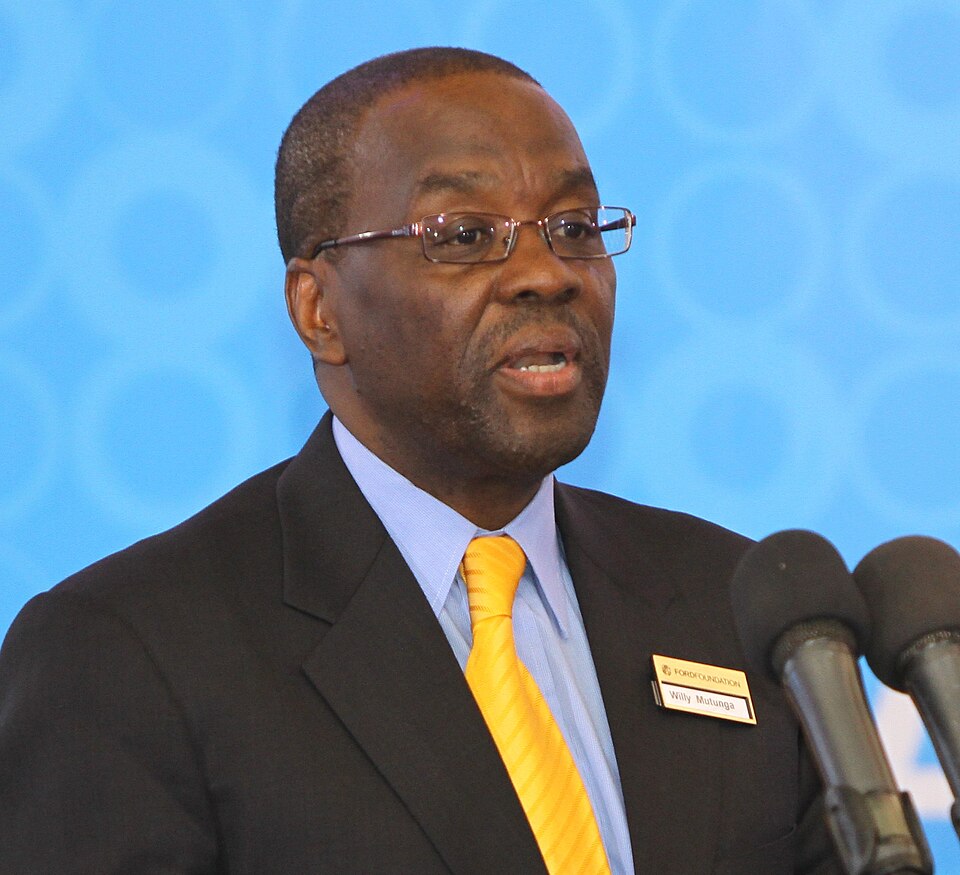

Willy Mutunga is one of the most influential legal thinkers and judicial reformers in Kenya’s post-independence history. His career spans academia, civil society activism, constitutional reform, and judicial leadership, placing him at the center of Kenya’s long struggle for democratic governance and the rule of law. As Chief Justice and President of the Supreme Court, Mutunga presided over a transformative period that sought to rebuild public confidence in a judiciary long perceived as opaque and politically compromised.
Born during the colonial era, Mutunga’s worldview was shaped by inequality, state power, and resistance politics. Unlike many judicial leaders whose careers are confined to the courtroom, Mutunga’s path moved through universities, detention cells, exile, human rights institutions, and international advocacy spaces. This unusual trajectory deeply influenced his philosophy of law as an instrument of social justice rather than a neutral technical exercise.
When Kenya adopted a new constitution in 2010, the country faced the challenge of translating progressive constitutional text into lived reality. Willy Mutunga emerged as a central figure in that transition. His appointment as Chief Justice in 2011 symbolized a break from the past and a deliberate choice to anchor the judiciary in constitutional supremacy, accountability, and access to justice. Supporters viewed him as a reformer with moral authority, while critics questioned his activism and unconventional public persona.
Beyond formal office, Willy Mutunga remains a prominent public intellectual whose views on governance, human rights, and state power continue to shape public debate. His legacy cannot be separated from Kenya’s broader constitutional journey and the contested space between law, politics, and social transformation.
Early Life and Education
Willy Mutunga was born in Kitui District during the final years of British colonial rule. Raised in a modest household, his early life reflected the economic and social realities faced by many Kenyan families. His academic excellence became evident at a young age, culminating in exceptional performance during his secondary education.
He pursued legal studies in East Africa at a time when universities were incubators of political thought and anti-colonial critique. His legal training at the University of Dar es Salaam exposed him to radical legal theory and Pan-African intellectual traditions. He later joined the University of Nairobi as a law lecturer, becoming the first Kenyan to teach constitutional law at the institution.
Mutunga later earned a doctoral degree from York University in Canada, further deepening his engagement with comparative constitutionalism, political economy, and human rights law. This academic grounding positioned him as both a scholar and a public intellectual.
Radical Activism and State Repression
During the 1970s and 1980s, Willy Mutunga emerged as part of a group of radical Kenyan academics who challenged authoritarian governance and economic inequality. His activism aligned with socialist and Marxist critiques of the post-colonial state, placing him under constant surveillance.
As a university lecturer and union leader, Mutunga advocated for academic freedom and political accountability. His involvement in underground publications and reform movements led to his arrest, detention, and eventual dismissal from the University of Nairobi. These events unfolded during a period of intense repression under the one-party state.
Detention and harassment forced Mutunga into exile in Canada, where he joined other Kenyan dissidents working to internationalize Kenya’s human rights struggles. This period reinforced his belief that legal systems are shaped by power relations and must be actively contested.
Exile, Human Rights Work, and Return
While in exile, Mutunga helped establish human rights institutions that later became central to Kenya’s civil society landscape. These organizations provided legal cover, advocacy platforms, and intellectual leadership during the struggle for multiparty democracy.
After the reintroduction of multiparty politics in the early 1990s, Mutunga returned to Kenya and assumed leadership roles in civil society. He chaired and directed the Kenya Human Rights Commission, transforming it into a key driver of legal reform and civic mobilization.
His work during this period focused on constitutional change, legal empowerment, and the democratization of state institutions. Rather than seeking elective office, Mutunga positioned himself as a facilitator of reform coalitions across political and civic divides.
Constitutional Reform and Legal Leadership
Willy Mutunga played a significant role in shaping Kenya’s constitutional reform movement throughout the 1990s. He promoted the idea of “constitution-making from the middle,” arguing that ordinary citizens, rather than political elites alone, should define the constitutional order.
Through alliances with lawyers, activists, and political leaders, he contributed to initiatives that kept constitutional reform alive despite state resistance. These efforts laid groundwork for the eventual adoption of the 2010 Constitution.
He also served in leadership roles within the Law Society of Kenya, pushing the organization into an activist posture that challenged executive dominance and judicial complacency.
Appointment as Chief Justice
In 2011, following a public and competitive selection process, the Judicial Service Commission recommended Willy Mutunga for appointment as Chief Justice. He was appointed by Mwai Kibaki and approved by parliament.
The appointment generated intense public debate. Supporters saw Mutunga as a reformist capable of restoring judicial independence, while critics questioned his lack of prior judicial experience and his activist background. Nevertheless, his appointment marked a symbolic shift toward constitutional accountability.
As Chief Justice, Mutunga prioritized institutional reform, transparency, and access to justice. He sought to reduce case backlogs, expand judicial infrastructure, and promote a people-centered judiciary.
Leadership of the Supreme Court
As President of the Supreme Court, Willy Mutunga oversaw critical constitutional cases, including challenges arising from national elections. Under his leadership, the court emphasized procedural clarity, constitutional interpretation, and institutional legitimacy.
Although some decisions attracted controversy, Mutunga consistently defended the independence of the judiciary and the supremacy of the constitution. His tenure coincided with heightened public scrutiny of courts and growing expectations of judicial accountability.
Retirement and International Engagement
Mutunga retired from office before reaching the mandatory retirement age to allow sufficient time for succession planning ahead of a general election cycle. In his farewell address, he emphasized institutional progress, reduced backlog, and strengthened judicial independence.
After retirement, he accepted an international role as Commonwealth Special Envoy to the Maldives, focusing on political dialogue and democratic transition. This appointment reflected his continued engagement with constitutional governance beyond Kenya.
Activism After the Judiciary
Following retirement, Willy Mutunga returned to public activism, often speaking on governance, protest rights, and state accountability. He has participated in regional solidarity actions and remained vocal during periods of civic unrest.
Despite controversy and political pushback, Mutunga continues to frame law as a moral and political project rooted in justice, dignity, and constitutional fidelity. His post-judicial activism underscores his long-held belief that citizenship requires constant engagement with power.
Legacy and Public Significance
Willy Mutunga’s legacy is inseparable from Kenya’s constitutional transformation. As a scholar, activist, and jurist, he challenged conventional boundaries between law and politics. His career reflects both the possibilities and tensions of judicial reform in a deeply unequal society.
Rather than consensus, his leadership provoked debate, which itself reshaped public expectations of the judiciary. In this sense, Willy Mutunga remains a defining figure in Kenya’s legal and democratic evolution.