

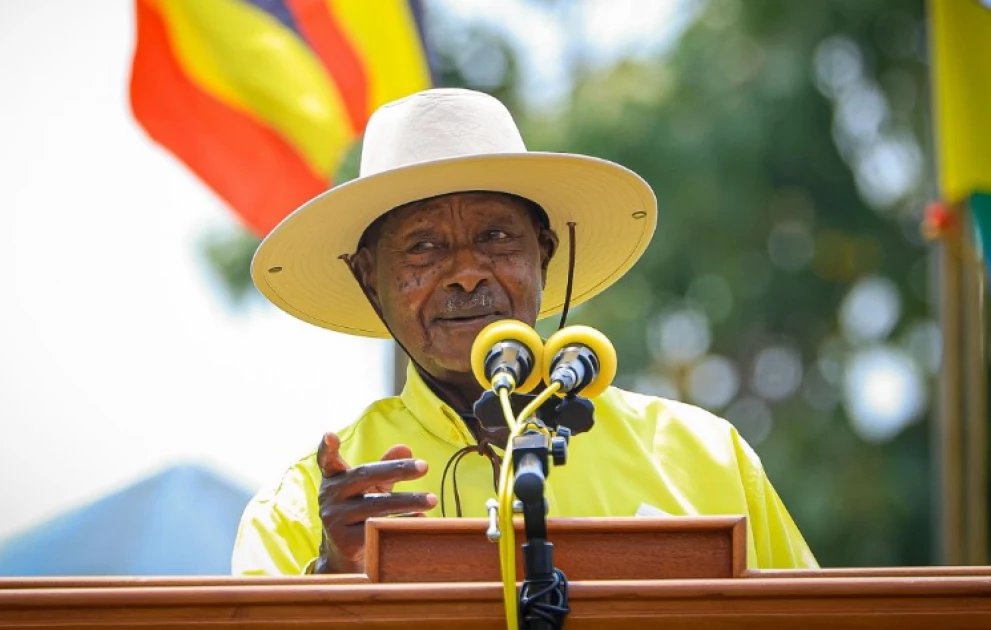
Uganda’s long-serving president Yoweri Museveni** is heading toward another election victory, according to provisional results released as vote counting continues nationwide. Early tallies place him well ahead of his main challenger, opposition leader Bobi Wine, who has rejected the credibility of the process and urged supporters to ignore what he calls manipulated results.
Figures published by the Electoral Commission show Museveni with about three-quarters of the vote, while Wine trails with just over a fifth, based on returns from the majority of polling stations. Although final results are yet to be announced, the margin has already triggered strong reactions from the opposition, which argues that the outcome was predetermined.
Tensions escalated further after claims that security forces surrounded Wine’s home in Kampala and later removed him to an undisclosed location. His party alleged that a military helicopter landed at his residence and that both Wine and his wife were seized. Authorities have not publicly confirmed the account, and police said they were unaware of any such incident, adding to uncertainty fueled by limited internet access.
Earlier, Wine said he had effectively been placed under house arrest after accusing authorities of electoral fraud. Police officials countered that heightened security around his home was intended to protect him, describing the opposition candidate as a “person of interest” during a sensitive post-election period. Journalists attempting to access the area reported being blocked by security personnel.
Election-related violence has also cast a shadow over the vote. Reports emerged of deadly clashes involving opposition supporters in Butambala district, southwest of the capital. Opposition figures claimed security forces fired live ammunition at crowds, resulting in multiple deaths, while police said officers acted in self-defence after being attacked. Independent verification has been difficult due to a nationwide internet shutdown.
The blackout, imposed days before voting, has drawn criticism from rights groups and international observers. Authorities defended the move as necessary to prevent misinformation and unrest, but the United Nations human rights office warned it could undermine transparency and accountability.
Polling day itself was marked by delays and technical problems. In several areas, voting started hours late after ballot materials arrived behind schedule and biometric voter identification machines failed, forcing officials to rely on manual verification. Electoral officials insisted the disruptions did not compromise result transmission, saying a private system was used to relay tallies.
Museveni, now in his 80s, is seeking a seventh term after nearly four decades in power, having first taken office in 1986. He presents himself as a guarantor of stability, while critics accuse his administration of repression and shrinking political space. Wine, a former pop star turned politician, has mobilised large numbers of young voters by promising anti-corruption reforms and political change in a country where most citizens are under 30.
As the Electoral Commission prepares to announce final results within the coming hours, Uganda remains on edge. While the numbers point toward another Museveni victory, disputes over the conduct of the election and the treatment of opposition figures suggest that political tensions will persist well beyond the official declaration.


