


The Safari Rally, an annual automobile rally held in Kenya, has earned a legendary status in the world of motorsports. Often regarded as one of the most grueling and difficult events in the World Rally Championship (WRC), it has been a symbol of resilience and endurance for over six decades. In addition to its history and challenges, the Safari Rally holds immense significance in Africa’s motorsport culture, drawing attention from rally enthusiasts and drivers worldwide.
First inaugurated in 1953 as the East African Coronation Safari to celebrate the coronation of Queen Elizabeth II, the rally has undergone several transformations, becoming a cornerstone of African motorsports. It was part of the WRC from 1973 to 2002 before returning to the prestigious series in 2021 after an 18-year hiatus.
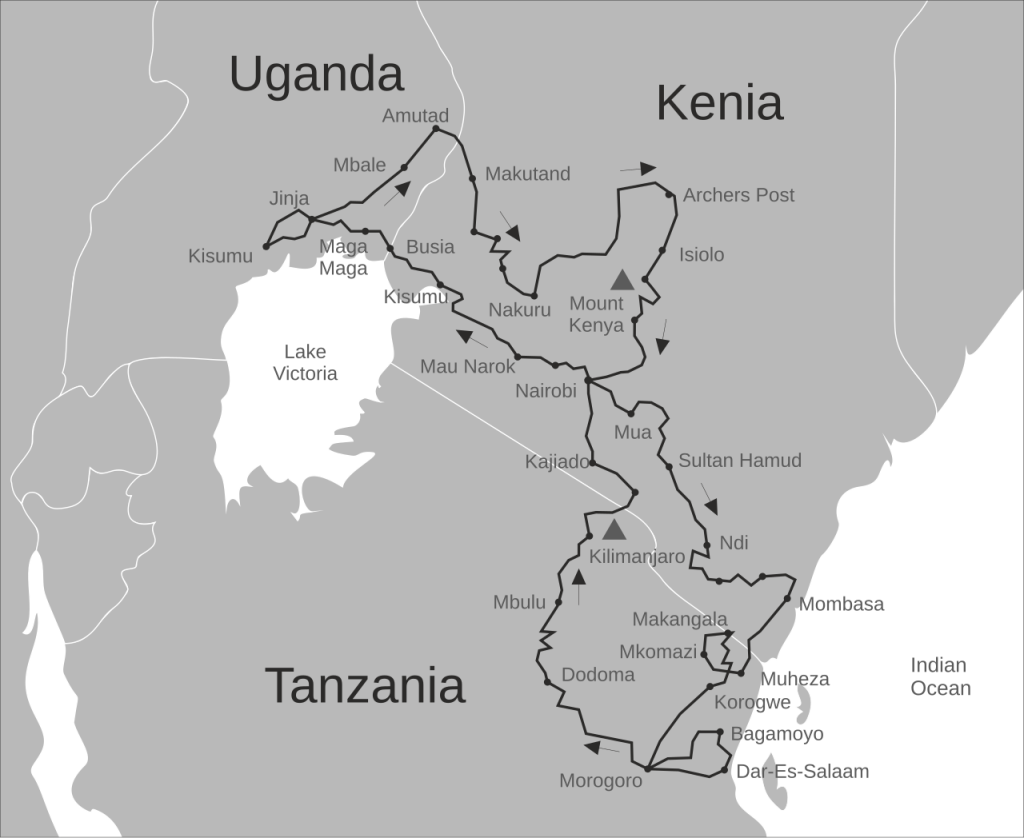
History of the Safari Rally
The origins of the Safari Rally can be traced back to 27 May – 1 June 1953, when it was first held in Kenya, Uganda, and Tanganyika. The event was initially a celebration of Queen Elizabeth II’s coronation, drawing participants from across East Africa. It quickly gained recognition for its challenging terrain, which included rough roads, deep mud, and unpredictable weather conditions. By 1960, the event was renamed the East African Safari Rally, a name it kept until 1974 when it was rebranded as the Safari Rally.
In 1973, the Safari Rally became a part of the World Rally Championship, attracting elite international rally teams. The rally’s unique combination of speed, skill, and endurance on some of the toughest terrains made it one of the fastest yet most challenging events on the WRC calendar.
The Toughest Rally in the World
The Safari Rally is renowned for its demanding conditions. Drivers face a 5,000-kilometer (3,100-mile) route through the rugged terrain of Kenya’s Great Rift Valley, where they encounter everything from fesh fesh (very fine powdery sand), fast farm tracks, to steep roads along the valley. The weather adds another layer of complexity—heavy rains often turn the roads into thick mud, further testing both the drivers’ and their vehicles’ endurance.
Unlike many other rallies, the Safari Rally was run on open roads, where all routes were competitive mileage. The driver who accumulated the least penalty time between time controls would be declared the winner. This setup meant that the event was not just about speed, but also about reliability and strategic driving, as the cars had to endure the brutal conditions for long stretches.
Teams built specially designed cars, equipped with bullbars, snorkels for river crossings, and bright lights to warn wildlife. The difficult conditions made repairs a common part of the rally, as teams would need to fix their vehicles regularly, leading to significant time penalties.
The Revival of the Safari Rally
The rally was suspended from the WRC calendar after 2002 due to financial constraints and organizational challenges. From 2003, it became part of the African Rally Championship (ARC) and continued to grow in popularity, albeit outside the global spotlight of the WRC.
In 2013, the rally began to gain attention once again when President Uhuru Kenyatta announced a plan to reintegrate the Safari Rally into the WRC. In 2019, it was officially confirmed that the rally would return to the World Rally Championship in 2020. However, the event was canceled due to the COVID-19 pandemic.
The 2021 Safari Rally marked its grand return to the WRC, held from 24–27 June in Naivasha, Nakuru County, after an 18-year hiatus. The event’s success in 2021 demonstrated Kenya’s ability to host a world-class rally, with Sébastien Ogier and Julien Ingrassia emerging as winners in their Toyota Yaris WRC.
Safari Rally Winners and Notable Drivers
Over the years, the Safari Rally has seen a number of legendary drivers make their mark. Among the most successful competitors in the history of the event are Kenyan drivers Shekhar Mehta and Carl Tundo, each securing five victories. Mehta’s wins came from 1973 to 1982, during the period when the event was part of the WRC, while Tundo dominated during the rally’s tenure in the ARC, winning in 2004, 2009, 2011, 2012, and 2018.
The rally has also attracted international rally stars such as Björn Waldegård, Tommi Mäkinen, and Colin McRae, who have made their mark in the event. McRae and Richard Burns were among the famous drivers who raced during the rally’s WRC years.
The Return to the World Rally Championship
The Safari Rally’s return to the WRC in 2021 was a landmark moment, symbolizing the revival of one of Africa’s most iconic motorsport events. Since then, the rally has been included in the WRC calendar until 2026, with a new generation of cars and teams participating in the event.
In 2022, Kalle Rovanperä claimed the win with his Toyota GR Yaris Rally1, continuing the tradition of excellence and excitement associated with the Safari Rally. The rally has consistently attracted global media attention, and it remains a key event in the WRC circuit.
The East African Safari Classic Rally
In addition to the modern WRC event, the East African Safari Classic Rally is another thrilling edition that takes place biennially. This classic rally is open to vehicles built before 1985 and is celebrated for its nostalgic appeal to both competitors and motorsports fans. The event’s long history and challenging conditions make it a coveted rally for vintage car enthusiasts and drivers.
The 2017 edition of the classic rally saw joint winners, Richard Jackson and Carl Tundo, each bringing home the trophy in what was one of the most memorable rallies in recent history.
Conclusion
The Safari Rally continues to be a cornerstone of motorsports in Africa. From its humble beginnings as the East African Coronation Safari to becoming a major event on the World Rally Championship calendar, the rally has built a legacy of endurance, skill, and excitement. Its return to the WRC in 2021 solidified its place as one of the most prestigious rallies globally, and it continues to attract top-tier drivers and motorsport enthusiasts from around the world.
| Status | Active |
|---|---|
| Genre | Motor Sport event |
| Date | June |
| Frequency | Annual |
| Location | Great Rift Valley |
| Country | Kenya |
| Inaugurated | 1953 |
| Website | https://www.safarirally.ke/ |
Winners
Kenyan drivers Shekhar Mehta and Carl Tundo have been the most successful competitors, with five outright victories each. Mehta won first in 1973, then consecutively from 1979 to 1982 – all while the event was part of the world championship. Tundo won five editions when the event was part of the African Rally Championship – the 2004, 2009, 2011, 2012 and 2018 events. Tundo has also finished on the podium twelve times, ahead of fellow Kenyan Ian Duncan with nine podium finishes.[14]
Notes: IMC = International Championship for Manufacturers, WRC = World Rally Championship, 2LWC = 2-Litre World Cup, ARC = African Rally Championship, IRC = Intercontinental Rally Challenge, KRC = Kenya National Rally Championship


