The Mount Kenya Wildlife Conservancy (MKWC), located in the scenic town of Nanyuki, stands as a beacon of conservation in Kenya. As a non-profit trust, MKWC has dedicated itself to preserving not only the region’s rich biodiversity but also safeguarding endangered species that are pivotal to the ecosystem. Situated within a UNESCO World Heritage Site, the conservancy has become a sanctuary for over 1,200 animals, encompassing 28 species. MKWC is renowned for its efforts to protect and revitalize critically endangered species such as the Mountain Bongo antelope, alongside other wildlife conservation programs.
A Rich Biodiversity Hub
Nanyuki, home to the Mount Kenya Wildlife Conservancy, is located at the base of the iconic Mount Kenya, a region teeming with wildlife and lush landscapes. The conservancy spans a diverse array of ecosystems, offering refuge to many species in a protected environment. It serves as a critical area for conservation efforts, helping to stabilize the local wildlife population and protect habitats from degradation.
The MKWC’s wildlife sanctuary provides an opportunity for animal species that were once at risk due to poaching, habitat destruction, and other human-made threats, to flourish. The conservancy’s ongoing work focuses on the rehabilitation and protection of these animals, offering a safe haven for those at risk of extinction.
Focus on the Mountain Bongo: A Critically Endangered Species
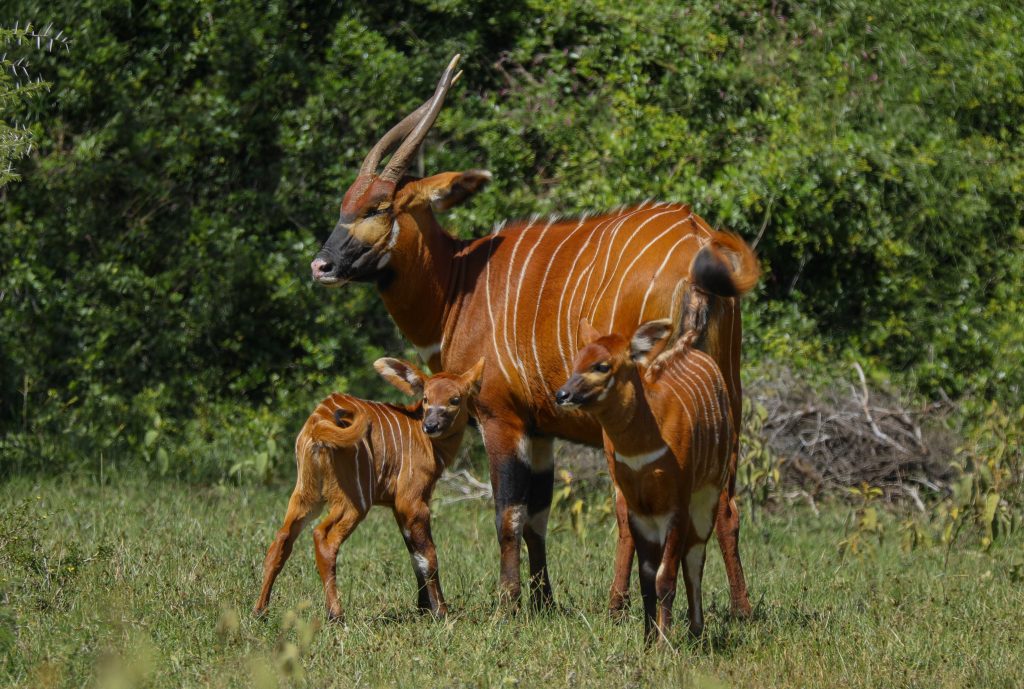
One of the flagship projects of the Mount Kenya Wildlife Conservancy is the breeding and rewilding program dedicated to the Mountain Bongo, a species of antelope classified as critically endangered. Once abundant in the forests of central Kenya, the Mountain Bongo’s population has been decimated due to illegal hunting and habitat loss. Today, fewer than 100 individuals remain in the wild.
The MKWC’s breeding program, launched with the aim of increasing the population of this iconic species, works hand in hand with the Kenya Wildlife Service (KWS) and the National Mountain Bongo Recovery and Action Plan. The conservancy is focused on reintroducing the Mountain Bongo to their native habitats, ensuring that the species not only survives but thrives in the wild.
In 2019, the Kenya Wildlife Service’s National Mountain Bongo Recovery and Action Plan set a goal to expand the population of these animals through conservation initiatives. MKWC’s breeding success has been instrumental in achieving this goal, and it continues to play a crucial role in the survival of the Mountain Bongo in the wild.
Animal Orphanage: Providing a Lifeline for Orphaned Wildlife
The Mount Kenya Wildlife Conservancy is also home to an animal orphanage that cares for young animals that have been orphaned due to poaching, habitat destruction, or natural causes. The orphanage serves as a sanctuary for a wide range of species, from mammals to birds, offering them the necessary rehabilitation before reintroducing them into the wild when possible.
The orphanage operates under strict guidelines to ensure that animals receive proper care, medical treatment, and rehabilitation. Its work is essential to reducing the impacts of poaching on the animal population and ensuring that orphaned wildlife can grow into healthy adults capable of thriving in their natural habitats.
Conservation Education: Raising Awareness for Future Generations
Beyond wildlife protection, MKWC is committed to conservation education, helping local communities and visitors understand the importance of preserving the environment and its biodiversity. Through its educational programs, the conservancy provides vital learning experiences for children, school groups, and tourists. These programs aim to raise awareness about the challenges facing wildlife, the importance of sustainable practices, and how individuals can contribute to conservation efforts.
By fostering a deeper connection between the public and the environment, MKWC hopes to inspire future generations to become stewards of the natural world, ensuring that the conservation legacy continues for years to come.
Giraffe Reintroduction: A Milestone in Conservation Efforts
In November 2023, the Mount Kenya Wildlife Conservancy achieved a significant milestone when giraffes were reintroduced to the region for the first time in 40 years. This marked a major step forward in the restoration of Mount Kenya’s diverse wildlife populations. The reintroduction of giraffes not only supports biodiversity but also strengthens the ecological balance of the area. As part of the conservancy’s broader commitment to animal rehabilitation and rewilding, the giraffe reintroduction stands as a success story in conservation efforts.
Partnership with the IUCN and Global Recognition
MKWC’s work has earned it recognition from international conservation bodies. It is one of only 13 conservancies in Kenya to be granted membership with the International Union for Conservation of Nature (IUCN). This prestigious status speaks to the conservancy’s dedication to sustainable conservation practices, wildlife preservation, and global environmental efforts.
Being a member of IUCN further enhances MKWC’s credibility as a key player in the fight against wildlife extinction. Through partnerships and collaboration with global conservation organizations, MKWC is able to share best practices and advance its mission to safeguard Kenya’s unique wildlife.
A Future of Hope for Mount Kenya’s Wildlife
The Mount Kenya Wildlife Conservancy continues to evolve and expand its efforts to protect the region’s biodiversity. As the challenges of poaching, habitat loss, and climate change persist, the conservancy’s work becomes more critical than ever. By focusing on breeding programs, animal rehabilitation, and education, MKWC remains committed to making a tangible difference in the survival of endangered species and the conservation of Kenya’s natural heritage.
With the continued support of local communities, the government, and global conservation organizations, MKWC aims to further its mission of ensuring that Kenya’s wildlife is preserved for future generations to enjoy and protect. Through its programs, the conservancy not only contributes to biodiversity preservation but also to the well-being of local communities and the global environment.