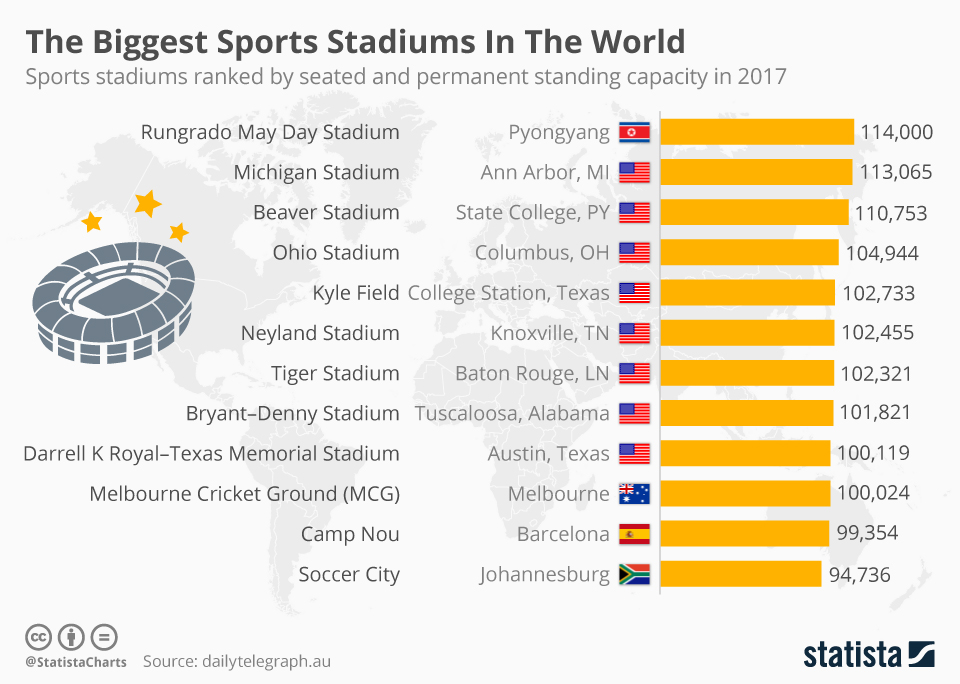

The world’s largest stadiums are more than just sports venues. They are national landmarks, economic engines, and cultural gathering points capable of hosting over 90,000 spectators at once. From cricket in Asia to American football in the United States and global football in Europe and Africa, these stadiums represent the scale and passion of global sport.
Below is a detailed, SEO-optimized guide to the largest stadiums in the world by seating capacity, based on official reported figures.
🏟️ Top Largest Stadiums in the World (By Capacity)
- Narendra Modi Stadium – 132,000
Located in Ahmedabad, India, this is the largest stadium on Earth. It hosts international cricket, IPL matches, and major national events. Its scale reflects India’s unmatched cricket culture. - Rungrado 1st of May Stadium – 113,281
The largest stadium in Asia, known for mass games, football, and national celebrations. Its distinctive flower-shaped roof makes it one of the most recognizable stadiums globally. - Michigan Stadium – 107,601
Nicknamed “The Big House,” this is the largest stadium in the United States and a symbol of American college football. - Beaver Stadium – 106,572
Home to Penn State football, Beaver Stadium regularly ranks among the loudest and most attended sports venues in the world. - Ohio Stadium – 102,780
Also called “The Horseshoe,” this iconic venue is central to U.S. college football tradition. - Kyle Field – 102,733
Located at Texas A&M University, Kyle Field is known for intense fan engagement and record-breaking attendance. - Tiger Stadium – 102,321
Home of LSU football, often called “Death Valley,” famous for night games and crowd noise. - Neyland Stadium – 101,915
One of the oldest and largest college football stadiums, overlooking the Tennessee River. - Bryant–Denny Stadium – 101,821
The fortress of Alabama Crimson Tide football, a powerhouse in NCAA history. - Darrell K Royal–Texas Memorial Stadium – 100,119
A historic stadium combining athletic excellence with national remembrance.
🌐 Largest Stadiums Outside the United States
- Camp Nou – 99,354
Europe’s largest football stadium and home to FC Barcelona, Camp Nou is a global football icon. - FNB Stadium – 94,736
Africa’s largest stadium, famous for hosting the 2010 FIFA World Cup final. - Melbourne Cricket Ground – 100,024
One of the most historic sports venues in the world, central to cricket and Australian Rules football. - Wembley Stadium – 90,000
England’s national stadium and a global symbol of football, concerts, and international finals.
📊 Why Stadium Size Matters
Large stadiums are not just about seating capacity. They:
- Drive sports tourism
- Create employment and urban development
- Serve as national identity symbols
- Host mega-events (World Cups, Olympics, concerts, political ceremonies)
The concentration of mega-stadiums in the U.S. reflects the dominance of college football, while Asia’s largest venues reflect population scale and national spectacle.
🔍 Frequently Asked Questions (SEO Boost)
What is the largest stadium in the world?
The Narendra Modi Stadium in India, with a capacity of 132,000.
Which country has the most large stadiums?
The United States dominates the top 20, mainly due to college football.
What is the largest football (soccer) stadium?
Rungrado 1st of May Stadium is the largest overall; Camp Nou is the largest in Europe.