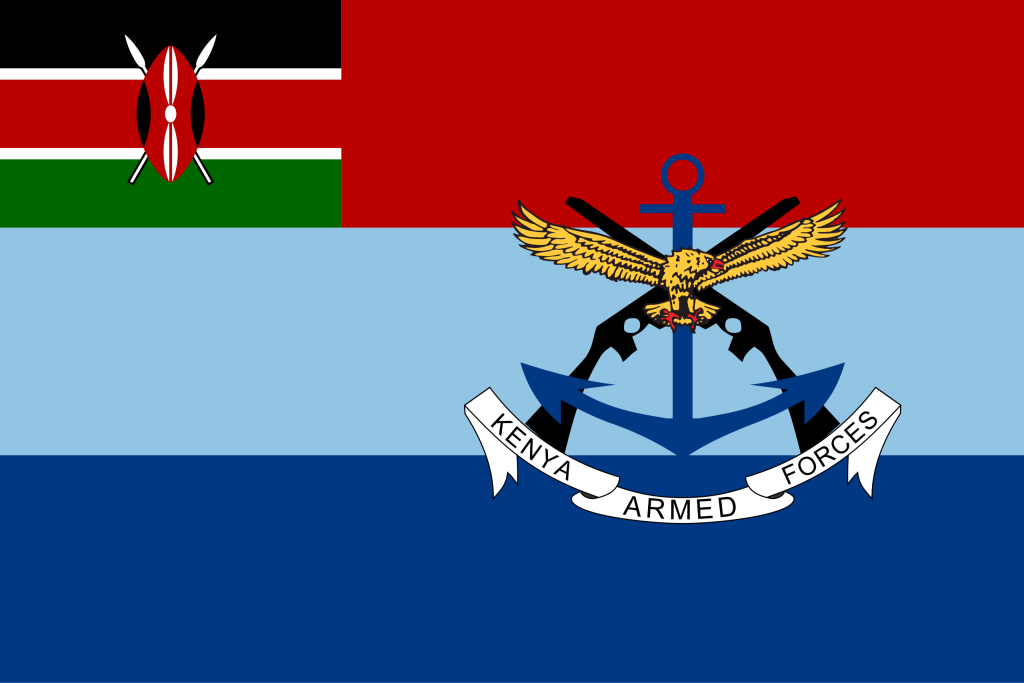


The Kenya Defence Forces (KDF) are the unified armed forces of the Republic of Kenya, responsible for defending the country’s sovereignty and territorial integrity. Established following Kenya’s independence in 1963, the KDF is composed of the Kenya Army, Kenya Air Force, and Kenya Navy. The primary mission of the Kenya Defence Forces is to safeguard Kenya from external and internal threats while contributing to global peacekeeping efforts.
In this article, we will delve into the history, structure, missions, and roles of the Kenya Defence Forces, providing insights into their operational significance and contributions both within the country and abroad.
History of the Kenya Defence Forces
The modern Kenya Defence Forces can trace their origins back to the British colonial era, with the formation of the King’s African Rifles (KAR). During this period, the KAR played a crucial role in the Second World War, the Mau Mau Uprising, and various regional conflicts. Upon Kenya’s independence in 1963, the newly formed government decided to reorganize and develop the Kenya Military Forces (KMF), which later evolved into the Kenya Defence Forces (KDF).
Colonial Roots: The King’s African Rifles
The King’s African Rifles (KAR), which was established by the British, was a key military force in Kenya during the colonial period. Soldiers from various East African communities, including Kikuyu, Luo, and Kamba, served in the KAR. They fought in key battles during World War I and World War II and also took part in suppressing uprisings, including the Mau Mau Rebellion in the 1950s.
Post-Independence: The Formation of the Kenya Defence Forces
On 12th December 1963, Kenya achieved independence, and the newly established Kenya government sought to build its own military forces. The Kenya Defence Forces (KDF) were officially formed by the Kenya Military Forces (KMF) Act of 1963. The King’s African Rifles units were restructured, and their responsibilities were transferred to the newly established Kenya Army.
The Early Years and Conflicts
The first years following independence saw the Kenya Army dealing with internal issues such as the Shifta War (1963–1967), which was fought against Somali separatists in Kenya’s northeastern regions. During this period, the Kenya Army expanded and was trained by British military advisors.
Kenya’s military continued to grow in prominence, participating in peacekeeping missions across the African continent, such as in Somalia and Sudan. Over the decades, Kenya’s military has also been involved in several counter-insurgency operations.
The Structure of the Kenya Defence Forces
The Kenya Defence Forces (KDF) is made up of three main branches:
1. The Kenya Army
The Kenya Army is the land-based branch of the KDF. It is responsible for land defense and includes a range of formations and units, including infantry, armored divisions, and artillery. The Kenya Army also plays a significant role in peacekeeping operations and counter-insurgency missions. Some of the notable units within the Kenya Army include the Kenya Rifles, Kenya Paratroopers, and the Kenya Armored Brigade.
2. The Kenya Air Force
The Kenya Air Force (KAF) was established in 1964 and plays a vital role in both defense and support operations. It provides air support to ground operations and carries out surveillance, search-and-rescue, and humanitarian missions. The Kenya Air Force also participates in international peacekeeping missions. The main airbase for the Kenya Air Force is located in Nairobi, and it operates a variety of aircraft, including fighter jets, transport planes, and helicopters.
3. The Kenya Navy
The Kenya Navy was formed in 1964 and is responsible for securing the country’s coastline and maritime interests. The Kenya Navy operates several bases along the Indian Ocean, including Mtongwe and Shimoni. The Navy also plays an important role in regional peacekeeping and counter-piracy operations in the Horn of Africa.
Key Missions and Operations of the Kenya Defence Forces
The Kenya Defence Forces have been actively involved in both domestic and international operations aimed at maintaining peace and security.
Operation Linda Nchi (2011-2012)
One of the most notable missions of the Kenya Defence Forces was Operation Linda Nchi, which took place between 2011 and 2012. This military operation was launched to counter the growing threat of Al-Shabaab, a Somali-based terrorist group that had been conducting attacks on Kenyan soil. The operation was carried out in coordination with the Transitional Federal Government of Somalia and the African Union Mission in Somalia (AMISOM).
During Operation Linda Nchi, Kenyan forces successfully captured the port city of Kismayo, a key stronghold of Al-Shabaab. This operation led to the Kenyan military’s integration into AMISOM, where they continued to provide crucial support in combating terrorism in Somalia.
African Union Peacekeeping Mission
The Kenya Defence Forces have also contributed significantly to peacekeeping efforts under the African Union and the United Nations. They have been involved in peacekeeping operations in countries such as Somalia, Sudan, and Democratic Republic of Congo.
Kenya’s involvement in AMISOM has been a key part of the country’s commitment to maintaining regional peace. As part of the AU mission, Kenyan troops have been deployed to Somalia to protect the Somali people from terrorist attacks and to assist in the stabilization of the country.
Counter-Insurgency Operations in Mount Elgon (2005-2008)
Another significant operation by the Kenya Army was the Mount Elgon insurgency. The operation was aimed at quelling violent activities by the Sabaot Land Defence Force (SLDF), a militia group that was destabilizing the region. The operation involved the use of both military and police forces and resulted in the eventual neutralization of the insurgent group.
Corruption and Challenges
Despite its successes, the Kenya Defence Forces has been embroiled in several allegations of corruption and mismanagement. Issues related to military procurement and recruitment have surfaced, with claims of favoritism, extortion, and inefficiency. Furthermore, accusations have been made regarding the KDF’s involvement in illicit activities, such as sugar smuggling from Somalia.
To address these issues, the Kenya Defence Forces have initiated reforms, including greater transparency in recruitment and procurement processes. In addition, the government has committed to addressing corruption within the KDF to ensure that it remains an effective and trusted force.
Recent Developments and Future Plans
In recent years, the Kenya Defence Forces have undergone significant reforms, especially with the implementation of the 2010 Constitution, which brought about changes in the military’s structure and leadership. These reforms have aimed at modernizing the KDF and improving its operational efficiency.
Modernization and Procurement
The Kenya Defence Forces are actively engaged in modernizing their equipment and capabilities. This includes the acquisition of advanced weaponry, aircraft, armoured vehicles, and surveillance systems. The KDF has also been focusing on enhancing its cybersecurity capabilities and establishing a military command that is better equipped to handle modern threats.
The Kenya Army has received several deliveries of main battle tanks and armored personnel carriers (APCs), while the Kenya Air Force continues to modernize its aircraft fleet to enhance its ability to engage in combat missions and peacekeeping operations.
Gender Integration
The Kenya Defence Forces have made strides in integrating women into various military roles. Women have been recruited into the Kenya Army, Kenya Navy, and Kenya Air Force, serving in both combat and non-combat roles. This integration is part of Kenya’s commitment to promoting gender equality in the military.
Conclusion
The Kenya Defence Forces (KDF) play a crucial role in safeguarding the sovereignty and security of Kenya, both domestically and internationally. The KDF’s involvement in peacekeeping operations, counter-terrorism, and national defense makes it a key pillar of Kenya’s national security strategy. However, the military faces challenges such as corruption, procurement inefficiencies, and the need for modernization. Moving forward, the KDF is focused on addressing these challenges while continuing to evolve into a more modern and effective force.